sulultapolytechniccollege@gmail.com +251118904024/+251118904020

Tech Transfer

Bridging the gap between TVET training and Industry through Innovation.

Innovation Center

Transforming Ideas into Reality

Our Technology Transfer department is mandated to identify, adapt, and transfer technologies that solve community problems. We support students and staff to develop prototypes that can be commercialized by the industry.

  • Industry Problem Solving
  • Reverse Engineering
  • Incubation Support

R&D

Research & Development

Incubation

Startup Support

Latest Innovations & Projects

Project Patent
Ongoing Feb 2026
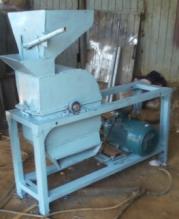
Grain mill

A grain mill isย a device, ranging from small kitchen appliances to industrial machinery, that grinds cereal grains (like wheat, corn, or rice) into flour, meal, or animal feed by crushing them between rollers, stones, or blades. Historically powered by wind or water, modern mills are typically electric, offering efficient, automated, and high-volume processing to separate bran from endosperm.
Project Incubation
Completed Jul 2025
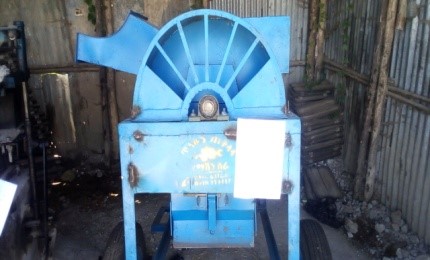
Multi-Crop Thresher

Function: This machine is used to separate grains from their husks/stalks (threshing). It is a critical post-harvest tool that replaces the traditional, labor-intensive method of using animals to trample the harvest.
How It Works
Feeding: Dried crops (such as Teff, Wheat, Barley, or Sorghum) are fed into the hopper (the curved blue opening at the top).
Threshing: Inside, a high-speed rotating drum with "beaters" or "teeth" strikes the crop, knocking the grain loose from the straw.
Cleaning: A built-in fan or blower (which is likely housed in the large circular section) blows away the light "chaff" (straw and dust).
Collection: The heavier, clean grain falls through a screen and is collected at the bottom outlet.
Key Benefits
Efficiency: It can process several quintals per hour, which would take days by hand.
Grain Quality: It significantly reduces grain breakage and ensures the final product is cleaner and free of stones or dirt.
Versatility: Most of these blue-painted models in Ethiopia are designed to be "multi-crop," meaning they can be adjusted to handle different types of grains by changing the internal screen or adjusting the drum speed.

Project Patent
Completed Nov 2023
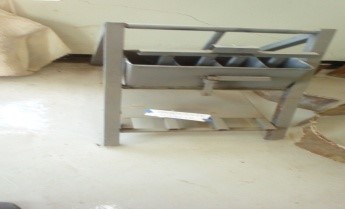
Manual Charcoal Briquette Press (or Briquette Maker)

Function
The primary function of this machine is to compress loose charcoal dust or biomass waste into solid, uniform blocks known as briquettes. This process turns waste materials into a high-density fuel source that burns longer and more efficiently than regular charcoal.
How It Works
Mixing: Charcoal dust or carbonized agricultural waste is mixed with a binder (like starch, clay, or waste paper pulp) and a small amount of water.
Loading: The damp mixture is placed into the square or cylindrical molds seen in the center of the frame.
Compression: The operator pulls down the handle, which uses mechanical leverage to press a plunger into the molds, squeezing out excess water and compacting the material.
Ejection: The finished briquettes are pushed out of the molds to be sun-dried before use.
Why Itโ€™s Useful
Waste Recycling: It allows people to use the "fines" (the small, unusable bits at the bottom of charcoal bags) that would otherwise be thrown away.
Cost-Effective: It provides a cheaper alternative to buying whole lump charcoal or firewood.
Eco-Friendly: By using waste materials, it reduces the need to cut down fresh trees for fuel.

Join the Student Innovation Club

Do you have a brilliant idea? We provide mentorship, lab access, and funding opportunities for students with viable technology prototypes.

Submit Your Idea